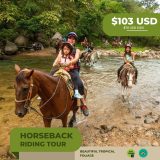


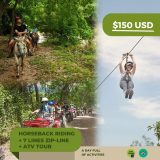
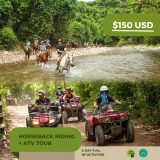
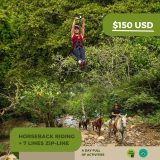
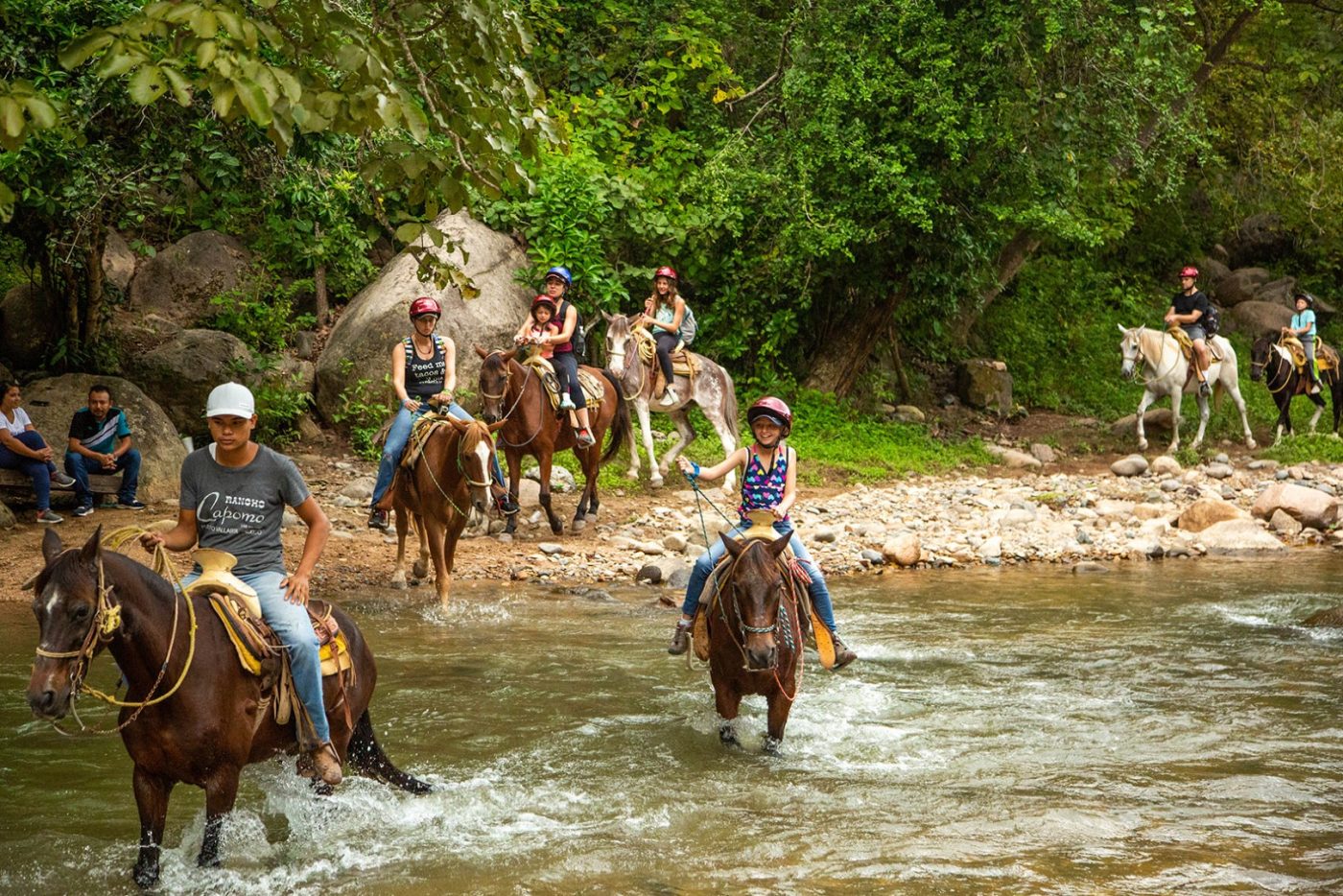
"When should we go?" is the first question travellers ask, and for adventure tours the answer is different than for a beach holiday. Sunshine matters less than water in the rivers, mud on the trails and how green the mountains are. This guide breaks the year down month by month from the perspective of Rancho Capomo, where we run horseback riding, ATV and zip-line tours in the Sierra Madre every day of the year.
Puerto Vallarta's two seasons in one paragraph
Puerto Vallarta has a tropical climate with a dry season from roughly November to May and a rainy (green) season from June to October. Temperatures on the coast range from the low 70s °F (22 °C) on winter mornings to the low 90s °F (33 °C) in summer afternoons, with humidity that climbs in the summer. In the mountains behind the city, where our ranch is, mornings are a few degrees cooler and the rain, when it comes, falls harder and turns the rivers into the main attraction.
Month by month
January
Peak season. Sunny, dry, comfortable 75–80 °F days, cool mornings. Trails are dry and easy, the waterfall is moderate. The busiest month for cruise ships and snowbirds: book tours a few days ahead.
February
Same perfect weather, slightly fewer people after the New Year rush. Whale-watching season on the bay; horses and ATVs in the hills. Great month for combos.
March
Warming up, still dry. Spring break brings crowds mid-month, and Easter week (Semana Santa, March or April depending on the year) is the busiest week of the Mexican calendar. The waterfall starts to shrink.
April
Hot, dry, sunny. The jungle turns from green to olive. Zip-lining and ATVs are unaffected; horseback tours start early to beat the heat. Fewer tourists after Easter, good availability.
May
Hottest, driest month. The waterfall is at its lowest and the trails are dusty. Prices for hotels drop. Still a good month for ATVs (dust instead of mud) and for zip-lining in the shade of the canopy. Bring water.
June
Transition month. The first rains arrive late in June and the landscape flips to green within days. Humidity rises. Mornings are still mostly dry and the first storms are short.
July
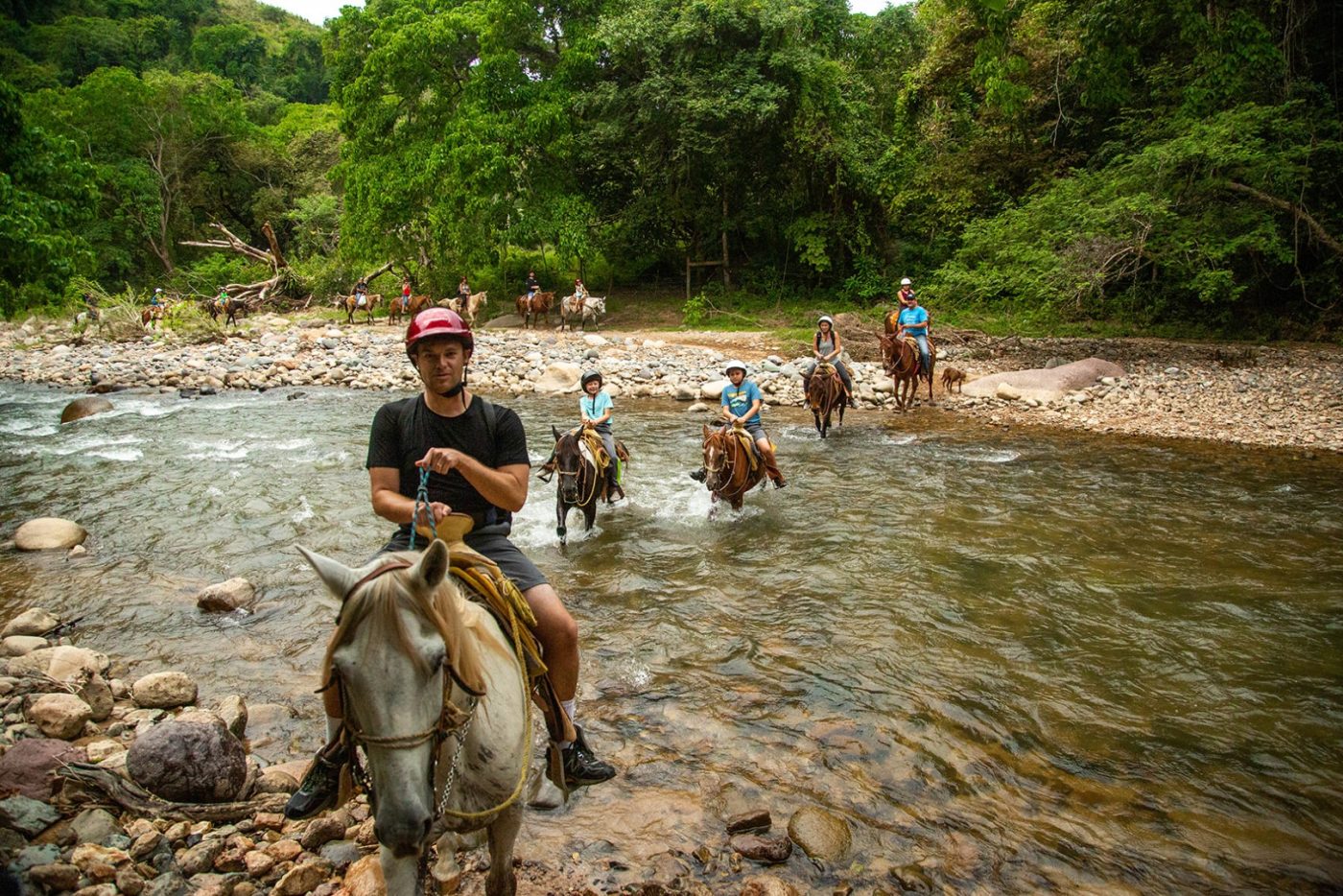
Green season proper. Afternoon and evening thunderstorms, spectacular skies, rivers running high. Morning tours go ahead; river crossings on horseback and ATV are at their most fun. Mexican school holidays bring domestic visitors.
August
The wettest, most humid month, and the most beautiful in the mountains: everything drips green, the waterfall thunders, the pools are deep. If you do not mind humidity, this is the most dramatic time to ride. Low international crowds, great deals on hotels.
September
Still rainy, occasionally stormy. The quietest month for tourism, which means small groups on tours and a ranch almost to yourself. Guides keep an eye on river levels and adjust routes when necessary.
October
Rain tapers off through the month. The jungle is still fully green and the waterfall still full, but dry mornings return. One of the best-kept secrets for adventure travel.
November
Our guides' favourite. Dry, mild, green, full waterfall, thin crowds until the last week when the winter season kicks off. If you can pick any month, pick this one.
December
The dry season is established, days are sunny and cool, and the mountains still hold the colour of the rains. Crowds arrive from mid-month; Christmas and New Year weeks sell out. Book early.
Best time by activity
- Horseback riding: October to February for comfort; July to September for the most dramatic river crossings.
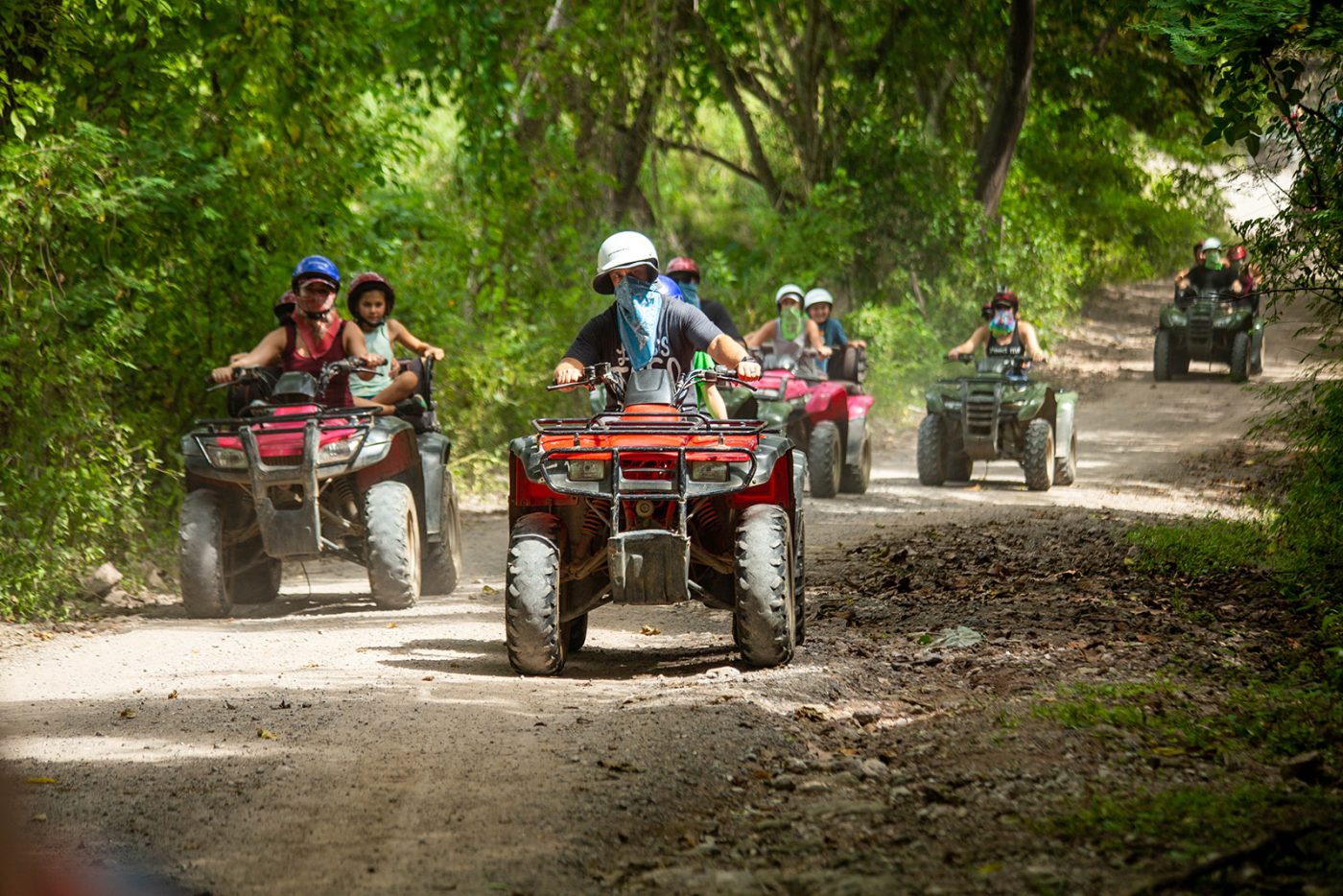
- ATV: the rainy season for mud lovers, the dry season for dust and speed. Both are fun; pack accordingly.
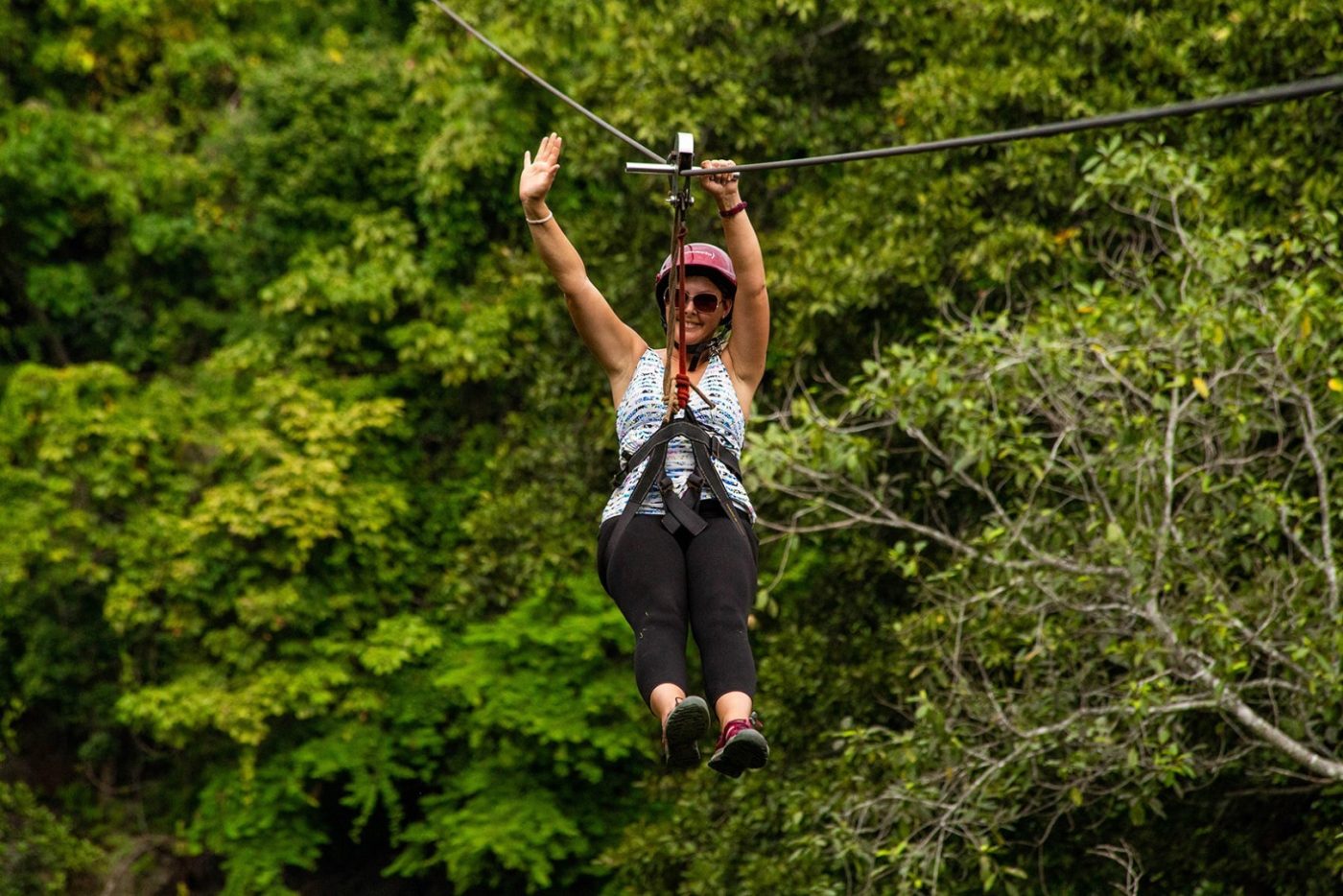
- Zip-lining: any month. The canopy shades the platforms and the lines run rain or shine (except during lightning, when we wait).
- Waterfall swimming: July to November for the big show; the pools are swimmable most of the year.
Time of day matters more than you think
Whatever the month, our tours leave Puerto Vallarta between 8:15 and 8:50 am. That is deliberate: the horses work in the cooler hours, the light in the jungle is best, and in the rainy season you are back at the ranch eating lunch before the afternoon clouds build. Afternoon tours would mean hotter animals, hotter riders and a real chance of rain. If a hotel desk offers you a mid-afternoon mountain tour in August, be sceptical.
What to pack by season
Dry season (November–May)
Sunscreen, a hat or bandana, sunglasses with a strap, a light long-sleeve for the ride, plenty of water, swimsuit and towel. Dust protection for the ATV.
Green season (June–October)
Bug spray is non-negotiable. Quick-dry clothes, a full change of clothes for the shuttle, a zip bag for your phone, shoes you do not mind soaking. A light rain jacket is optional; you will get wet at the river anyway.
Crowds and prices
Tour prices at Rancho Capomo are the same year-round ($103 USD horseback or zip-line, $113 USD ATV, $150 USD combos), so the season affects availability rather than cost. Hotels and flights are cheapest from May to October. If you want the best value for the whole trip and the best-looking mountains, aim for late October or early November.
How the seasons change the ride itself
Beyond weather, the season changes what the horses, the ATVs and the trail do. In the dry months the river fords are shallow and the horses barely wet their hooves; in August the same crossings reach the stirrups and the guides pick the line carefully. The ATV tracks that are hard-packed dirt in March are two ruts of red mud in September, which is precisely the point for many drivers. The jungle trail to the waterfall is dry and open in spring and dripping, mossy and loud with the river in late summer. Even lunch changes: mango season (May–July) means fruit from the ranch's own trees on the table. None of this makes one season better than another; it makes the same tour worth doing twice.
Best time to visit for specific travellers
- Families with school-age kids: Christmas break, spring break and summer holidays are when you can travel; of the three, summer gives you the fullest waterfall and the smallest crowds at the ranch. Book Christmas early.
- Couples on a budget: late September to early November. Cheap hotels, green mountains, quiet tours.
- Retirees and snowbirds: January to March for guaranteed sunshine and mild mornings; midweek departures avoid cruise crowds.
- Photographers: October–November. Full waterfall, saturated green, clear morning light.
- Cruise passengers: you do not choose the month; you choose the tour. Every month works for a port day; see our cruise guide.
Temperature and rainfall at a glance
Typical values for Puerto Vallarta, useful for packing (the ranch is a few degrees cooler in the morning):
- Dec–Feb: highs 79–82 °F (26–28 °C), lows 61–64 °F (16–18 °C), almost no rain.
- Mar–May: highs 84–90 °F (29–32 °C), lows 64–72 °F (18–22 °C), dry; May is the hottest, driest month.
- Jun: highs 90 °F (32 °C), humidity rising, first storms late in the month.
- Jul–Sep: highs 90–92 °F (32–33 °C), lows 75 °F (24 °C), the wettest months with most rain falling between 4 pm and midnight.
- Oct–Nov: highs 88 → 84 °F (31 → 29 °C), rain fading to almost none by mid-November.
Water temperature in the mountain pools stays refreshing year-round; the river is cooler than the sea in every month.
Green season myths, debunked
- "It rains all day." It does not. Summer rain in Vallarta is an afternoon or night event; mornings are usually sunny.
- "The tours get cancelled." Morning tours run; only lightning pauses the zip-line and only a tropical storm postpones a day.
- "It is too hot to ride." The mountains are cooler than the beach, the trail is shaded and the river is right there.
- "The mosquitoes are unbearable." They are present at the waterfall in summer; bug spray handles them. In the dry season they are barely there.
Hurricane season: what it actually means in Puerto Vallarta
The Pacific hurricane season runs from mid-May to the end of November, and every year someone asks whether it is safe to visit in that window. Puerto Vallarta sits inside a deep bay protected by the Sierra Madre, and direct hurricane hits are rare; the last significant one to affect the area was Kenna in 2002. Tropical storms passing offshore bring a day or two of heavy rain and big surf, after which the sun returns. If a storm is forecast we postpone tours and rebook you; guides never take a group into the mountains in a tropical storm. On the vast majority of days between June and November the weather is a morning of sun and an afternoon of clouds.
Holidays and events that affect availability
- Christmas and New Year (Dec 20–Jan 6): the busiest two weeks of the year. Book tours as soon as your flights are set.
- Semana Santa and Pascua (the two weeks around Easter): Mexican families fill the city and the beaches. Tours run full.
- Mexican summer holidays (mid-July to mid-August): busy with domestic visitors, especially at weekends.
- US and Canadian Thanksgiving, spring break (March): noticeable bumps in cruise and hotel arrivals.
- Cruise ship days: on days with two or three ships in port, the 8:40 am Marina Vallarta pick-up fills first.
Weather on the coast vs. in the mountains
Puerto Vallarta's weather forecast is written for the beach. Las Palmas, where the ranch is, sits at the foot of the Sierra Madre and behaves differently: mornings are two or three degrees cooler, afternoon storms in summer arrive earlier and drop more rain, and the rivers respond within hours. That is why our departure times never change with the season: an 8:15–8:50 am pick-up puts you on the trail in the coolest, driest, best-lit part of the mountain day regardless of the month.
A note on the waterfall by season
Because it is the question we get most, here is the waterfall in one line per season. December–February: moderate flow, clear pools, cool water. March–June: low flow, warm pools, gentle. July–September: strong flow, deep pools, loud, occasionally too strong to stand under (the guides set the swimming area). October–November: full but calming, the prettiest month for photos. It flows year-round; we have never had a dry waterfall.
Combining tours with the rest of your trip
If your holiday is a week long, a good pattern is a beach day to recover from the flight, the ranch on day two or three while you are still fresh, and boat trips or town days after that. Guests who leave the mountain tour for the last day sometimes miss it to a late-booked flight or a hangover; the ones who do it early talk about it for the rest of the week. Whatever the season, that order works.
Bottom line
There is no bad month for adventure tours in Puerto Vallarta, only different ones. Dry season gives you easy trails and guaranteed sunshine; green season gives you rivers, mud and a waterfall worth the name. Whenever you come, book a morning departure, wear closed shoes and bring a swimsuit. See availability on our combo tours page or ask us on WhatsApp at +52 322 230 7793 what the river looks like this week.
Frequently Asked Questions
What is the best month for horseback riding in Puerto Vallarta?
November. The rains have just ended, the jungle is at its greenest, the waterfall is full and the mornings are dry and mild. October and December are close seconds.
Do tours run in the rainy season?
Yes, every day. Rain in Puerto Vallarta falls mostly in the late afternoon and at night from July to September; our tours run in the morning and early afternoon, so they are rarely affected.
When is the waterfall biggest?
From July to November. It is smallest in May and June, at the end of the dry season, but the pools remain swimmable.
When is Puerto Vallarta most crowded?
Mid-December to Easter week, plus the weeks around Christmas and New Year and July for Mexican families. Book tours a few days ahead during those periods.
Is it too hot for tours in summer?
Mornings in the mountains are cooler than the beach, and the rivers and waterfall are there to cool you off. Start early, drink water and you will be fine.