Zip-lining is the excursion people book with a mix of excitement and nerves. If you have never done it, the questions pile up: how high is it, how fast, what if I freeze on the platform, is it really safe? This guide walks you through a canopy tour from start to finish so you know exactly what you are signing up for when you book the Sierra Madre zip-line tour at Rancho Capomo, in the mountains 25 minutes from Puerto Vallarta.
What a canopy zip-line tour actually is
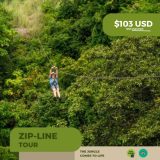
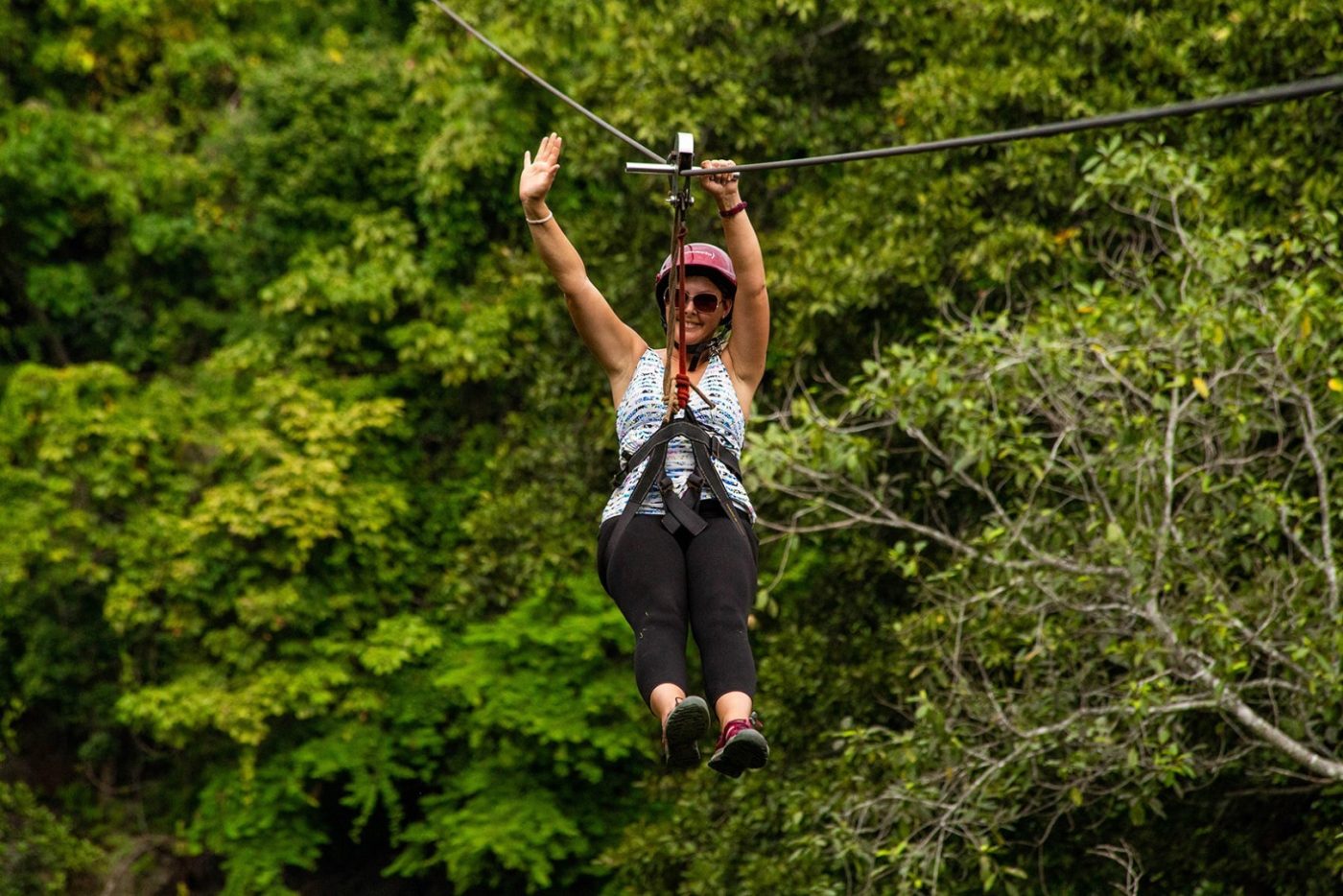
A zip-line is a steel cable stretched between two platforms at different heights. You hang from the cable on a pulley (the "trolley"), attached to a harness, and gravity does the rest: you glide from the higher platform to the lower one. A canopy tour links several lines through the treetops with short walks, stairs and hanging bridges between them.
Ours has thirteen lines along the river in the Sierra Madre rainforest. The first lines are short and low, so you learn the position and the braking signal without pressure. The lines get longer and higher as you go, with the best views saved for the end: green canopy below you, the river flashing between the trees, the hills of Las Palmas in the distance.
How safe is zip-lining? The honest answer
Zip-lining is safe when three things are true: the course is built and inspected properly, the gear is in good condition, and the guides follow a strict clip-in routine. Here is what that looks like at Rancho Capomo:
- Full-body harness, not just a seat harness, with a helmet and leather gloves.
- Double connection: you are attached to the cable by the trolley and by a safety line. When you move between the cable and the platform anchor, one connection is always in place before the other is released.
- Guides clip you in and out. You never touch the carabiners yourself. One guide sends you off, another receives you and brakes you at the end of the line.
- Braking is done by the guides with a braking system at the arrival platform, so you do not have to worry about stopping yourself. You just keep your legs up and follow the hand signal to slow down if asked.
- Cameras and phones stay off the lines. A dropped phone is a projectile for anyone below; that is why we say no.
The restrictions are the same as our other tours: a 250 lb (120 kg) weight limit and no zip-lining for expecting mothers or guests with heart, back, neck, balance or dizziness conditions.
What the day looks like
Pick-up and arrival
Transportation is included from three pick-up points in the Zona Romántica (8:15 am), Marina Vallarta (8:40 am) and Las Juntas near Nuevo Vallarta (8:50 am). After a 45-minute drive you arrive at the ranch in Las Palmas.
Gear up and practice
Guides fit each harness and helmet, explain the sitting position (legs up, one hand on the trolley handle, the other resting on the cable behind the trolley with the glove) and the signals for "slow down" and "keep going". You walk to the first platform through the jungle.
The thirteen lines
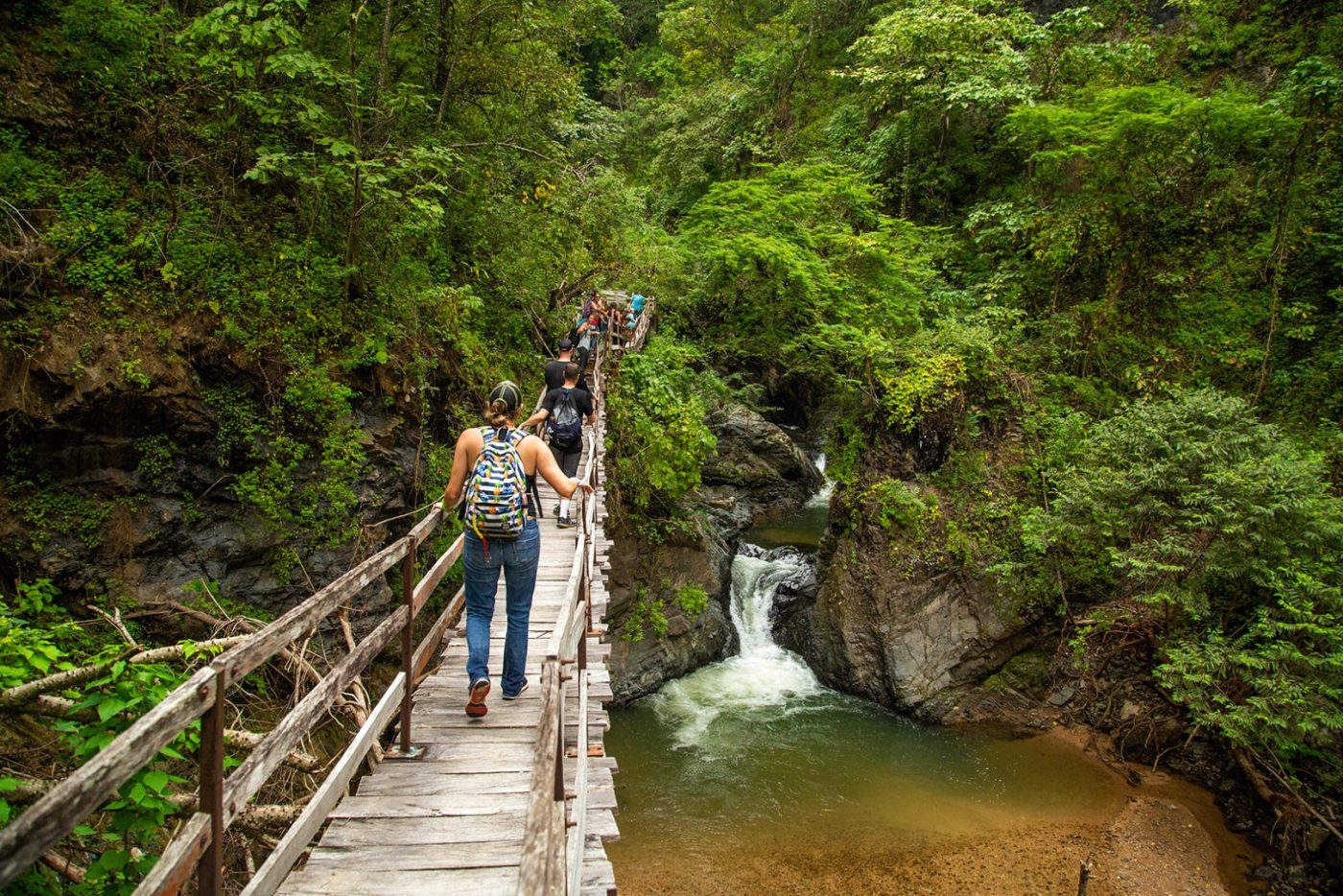
Line one is a confidence-builder. By line three most people are whooping, and on the full tour lines eight to thirteen take you deeper into the canopy. Between lines you cross hanging bridges over the river and climb a few stairs; nothing strenuous, but wear closed shoes. Guides take photos at the platforms since your camera stays in the bag.
Waterfall, cooking class and lunch
After the last line there is time to swim in the river pools and visit the waterfall. Back at the ranch you make salsa and hand-made tortillas and sit down to fajitas or chicken, guacamole, beans, rice and an open bar before the shuttle takes you back to town.
What to wear zip-lining
- Closed shoes that will not fall off mid-air: sneakers or trail shoes.
- Shorts or light pants. The harness sits on your thighs, so avoid very short shorts.
- A fitted t-shirt. Loose clothing can catch in the trolley.
- Hair tied back, no scarves, no dangling jewelry.
- Swimsuit underneath for the waterfall, towel and dry clothes in a small backpack that stays at the ranch.
- Sunscreen and bug spray; sunglasses only with a strap.
Tips for nervous first-timers
- Do not look for the bottom. Look at the destination platform. The guide waiting there is your focus point.
- Sit back into the harness before you leave. Once you feel it holding you, the fear of falling disappears.
- Go second or third, not first. Watching one person cross tells your brain it works.
- Breathe out as you step off. It sounds silly; it works.
- Kids are often braver than adults. If your child is excited, do not talk them out of it. If they are scared, a tandem ride with a guide solves it.
Prices and combos
The zip-line tour is $103 USD for adults and $78 USD for kids, including transportation, all 13 lines, gear, guides, the waterfall, the cooking class, lunch and open bar. If you want more from the day:
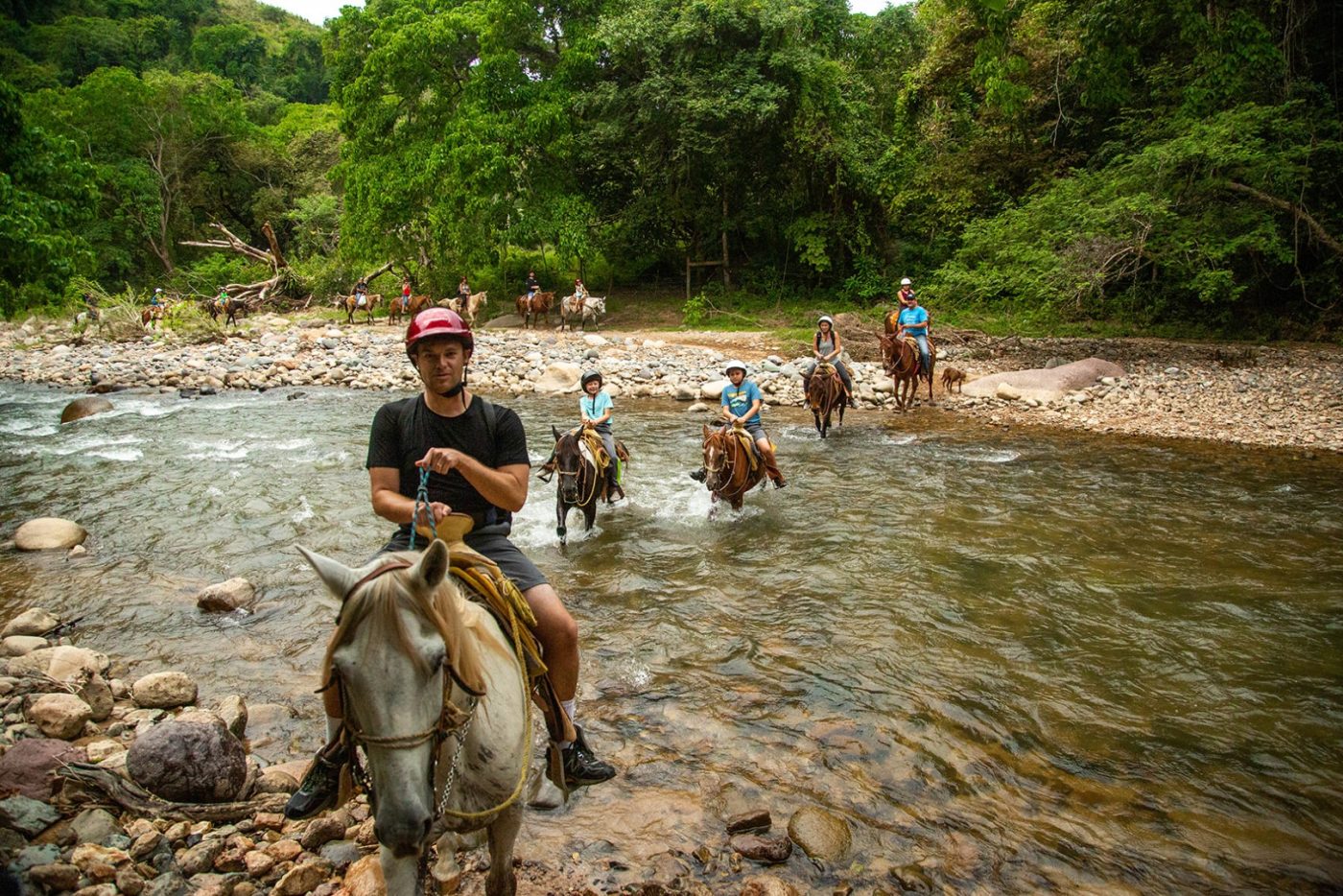
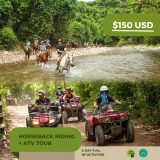
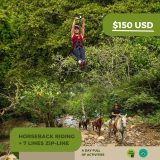
- Horseback riding + zip-line: ride to the waterfall, then fly over it. $150 USD.
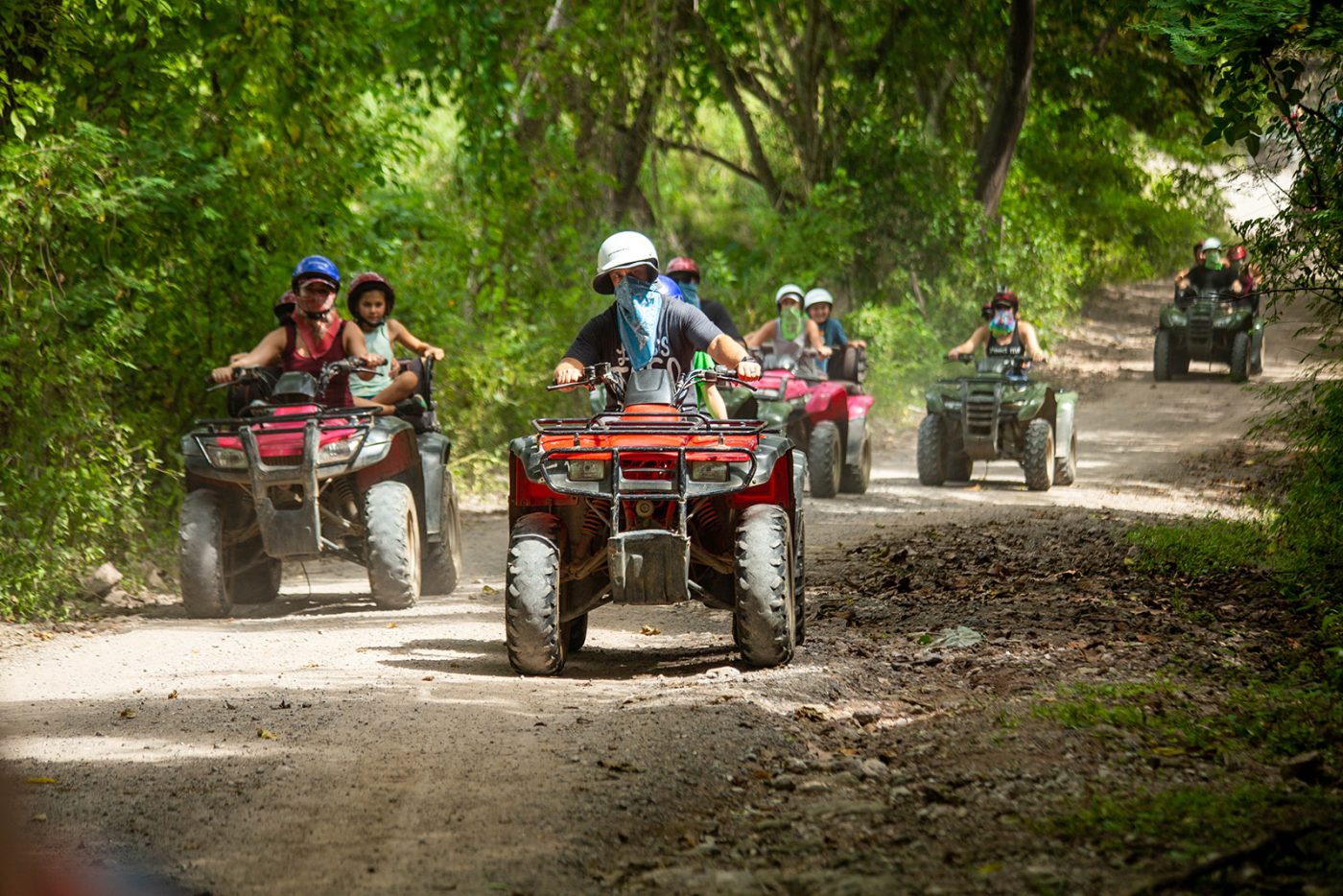
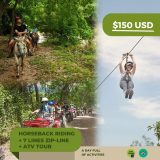
- Ultimate combo: horseback riding, zip-line and ATV in one day. $150 USD.
Prices are in US dollars, taxes included, and you pay online with real-time availability.
Zip-lining and the fear of heights: what actually happens
Being afraid of heights does not disqualify you from zip-lining; roughly a third of our guests say they are. What happens on the platform is usually this: your stomach drops when you look down, the guide clips you in and tells you to sit back into the harness, you feel the straps take your weight, and the fear converts into something closer to excitement because you are no longer standing on an edge, you are hanging safely from a cable. The step off is the only hard moment, and it lasts one second. After the first line the brain has evidence that the system works, and lines two to seven are pure fun. We have never had a guest who went on the first line and refused the second.
If you truly cannot do it, nothing is forced. You can walk back with a guide and wait at the ranch, or watch from the platforms and join for the waterfall and lunch. Nobody is charged extra for being brave enough to admit it.
Height, speed and length: the numbers
Guests ask for numbers, so here they are in round terms. Platforms sit between roughly 10 and 30 metres above the ground or the river (30 to 100 feet), higher on the lines in the middle of the course. Speeds range from a gentle 20 km/h on the first line to around 50 km/h (30 mph) on the fastest, which feels quick over treetops but is slower than a car on a city street. The longest cable is several hundred metres. Together the thirteen lines add up to well over a kilometre of flight through the canopy, which is why the course takes an hour and a half rather than fifteen minutes.
Physical requirements
You do not need to be fit or strong; the harness holds you and the guides brake you. You do need to be able to walk short jungle paths and climb stairs between platforms, cross a hanging bridge, and hold your legs up in the seated position for the length of each line (thirty seconds to a minute). The weight limit is 250 lbs (120 kg) and there is a minimum size for the harness for small children, who otherwise ride tandem with a guide.
The course, section by section
Every course is different, and knowing what is coming helps nervous first-timers. Ours runs along the river below the ranch: 13 lines on the full zip-line tour, of which the combo tours ride the 7 best. This is the shape of the first seven; the remaining six on the full tour repeat the pattern deeper into the canopy, longer and higher each time:
- Line 1 – the practice line. Short, low, slow. The guides use it to check your position and braking signal. Most people say "that's it?" and grin.
- Line 2 – over the river. The first real view down to the water. Still gentle.
- Line 3 – into the canopy. Longer and faster; the platform is in a big tree and the cable disappears into green.
- Line 4 – the long one. The longest cable on the course, with a view up the valley. This is the one people remember.
- Line 5 – the fast one. A steeper angle and a quick ride; the guides brake you firmly at the end.
- Line 6 – the hanging bridge line. You reach it by crossing a suspension bridge over the stream, which for some guests is scarier than the cable.
- Line 7 – the finish. A last glide down to the river bank, where the trail to the waterfall begins.
Between lines you walk short jungle paths and climb a few stairs. The full 13-line course takes about two hours at a relaxed pace, the 7-line combo version about an hour and a half, with plenty of time for photos at the platforms.
Gear explained
You will wear a full-body harness (leg loops plus chest straps, so you cannot flip out of it), a helmet, and a leather glove for the hand that rests on the cable behind the trolley. The trolley is a double-pulley device rated far above the weight of any rider. Two lanyards connect your harness to the trolley and to the safety line. Guides inspect every harness before the first line, and the cables, anchors and platforms are checked before each day's tours.
Zip-lining with kids
Children are usually the bravest people on the platform. The rules are simple: a child who fits the harness rides their own line, with a guide sending them off and another receiving them; a smaller child rides tandem, clipped to a guide on the same trolley. Parents can go first to show it is fine, or second to watch. The kids price is $78 USD and includes everything the adult price does: transport, the course, the waterfall, cooking class and lunch. We have had grandparents and grandchildren on the same line in one morning.
Zip-lining in the rainy season
The lines run rain or shine. Light rain makes the jungle glow and does not affect the cables. The only thing that pauses the course is lightning; if a storm rolls in, everyone waits on the ground until it passes, and on morning tours in the rainy season (July–October) that almost never happens because the storms come in the afternoon. The river below the course is fuller and louder in those months, which makes the crossings on the bridges more dramatic.
What guests say about the zip-line tour
The most common line in our Google reviews about the canopy is some version of "I was terrified and then I wanted to do it again". The second most common is praise for the guides who talked someone off the first platform. The third is about lunch. We take all three as a compliment.
Zip-lining vs. the other Puerto Vallarta adventures
Zip-lining is the shortest and most intense of the three activities at the ranch. If you want adrenaline in a compact package, book it on its own. If you want a full day in the mountains, add horses or ATVs. Our guide to combo tours explains how the day is sequenced so nothing feels rushed. Ready? Check dates on the zip-line tour page or ask us on WhatsApp at +52 322 230 7793.
Frequently Asked Questions
Is zip-lining in Puerto Vallarta safe?
Yes, when the course is properly built and run. At Rancho Capomo each rider wears a full-body harness with a double connection, a helmet and gloves; guides clip you in and out at every platform and brake you at the end of each line. You never unclip yourself.
How much does a zip-line tour cost in Puerto Vallarta?
The Sierra Madre zip-line tour at Rancho Capomo is $103 USD for adults and $78 USD for kids, with transportation, all 13 lines, waterfall, lunch and open bar included. Combos with horseback riding or ATV are $150 USD.
How many zip-lines are there?
The full zip-line tour has 13 lines strung between platforms in the trees along the river, of increasing length, plus hanging bridges and jungle trails between them. The combo tours (horseback + zip-line, and the ultimate combo) include a 7-line version of the course so there is time for the other activities.
Can kids zip-line?
Yes. Children who fit the harness ride with their own guide-assisted connection, and younger ones can ride tandem with a guide. The kids price is $78 USD.
Can I take my camera on the zip-line?
No. For safety, cameras and phones are not allowed on the lines. Guides can take photos at the platforms, and you can film everything else on the tour.
What is the weight limit?
250 lbs (120 kg). Expecting mothers and guests with heart, back, neck, balance or dizziness conditions should not zip-line.